
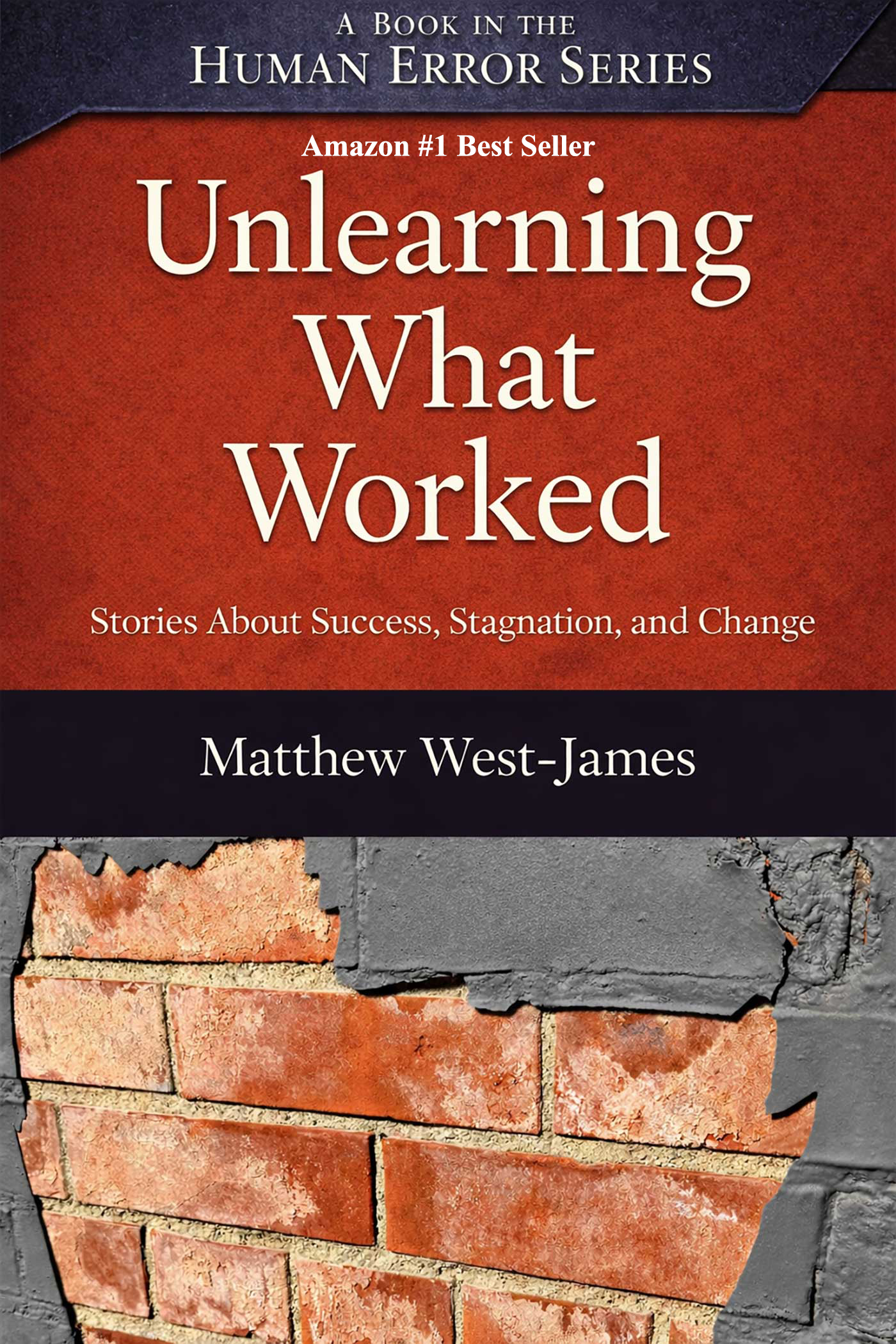
Unlearning What Worked
Unlearning What Worked is a collection of lived stories about trying to be a successful human in a world that keeps changing the rules.
For much of my life, I relied on the tools that once kept me safe: staying invisible, avoiding risk, following the rules, and doing what was expected. On paper, those strategies worked. The career progressed. The responsibilities grew. From the outside, things looked successful.
But over time, those same tools stopped working.
Growth slowed. Satisfaction faded. The paths that once felt reliable began to feel constraining instead of protective.
“Being invisible kept me safe. Leadership required something different.”
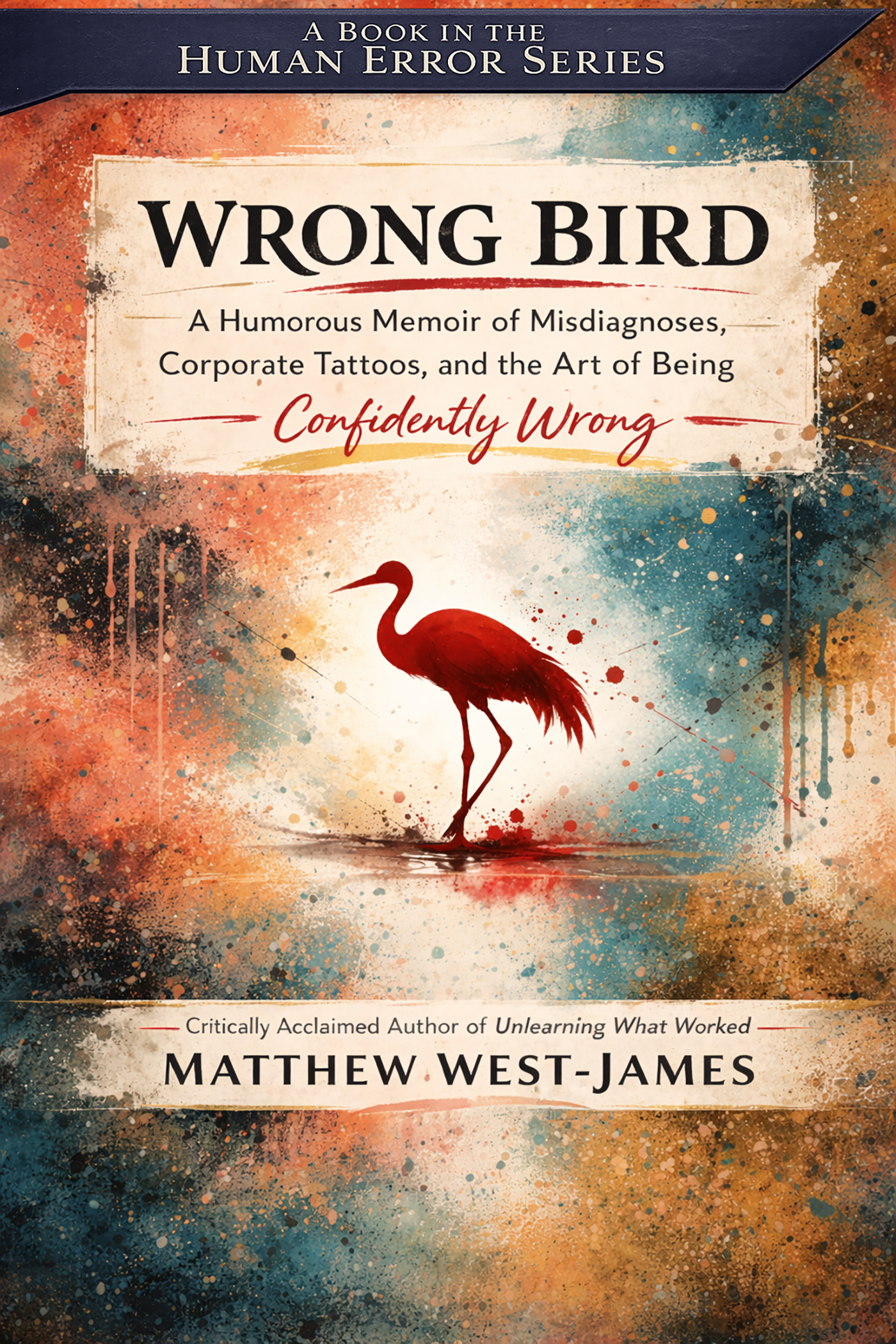
Wrong Bird
This is a collection of personal essays that examine the humor that is available when awkward decisions, missteps, over-confidence, and the logic that only makes sense at the time occur. The personal essays by Matthew West-James offer a self-deprecating look at moments that were embarrassing at the time but insightful in hindsight. From bad ideas and misinterpretations, to tales that will not die quietly into the past, the essays examine the space between the person you think you are and the person you actually become. While not as serious as traditional memoirs, the work has a undertone of personal growth, strength, and wisdom. The work is ultimately a story about learning to laugh at oneself without dismissing the experience. It encourages the reader to think about their own moments of “how did I get here?” and realize that the best tales start with, “You’re not going to believe…”
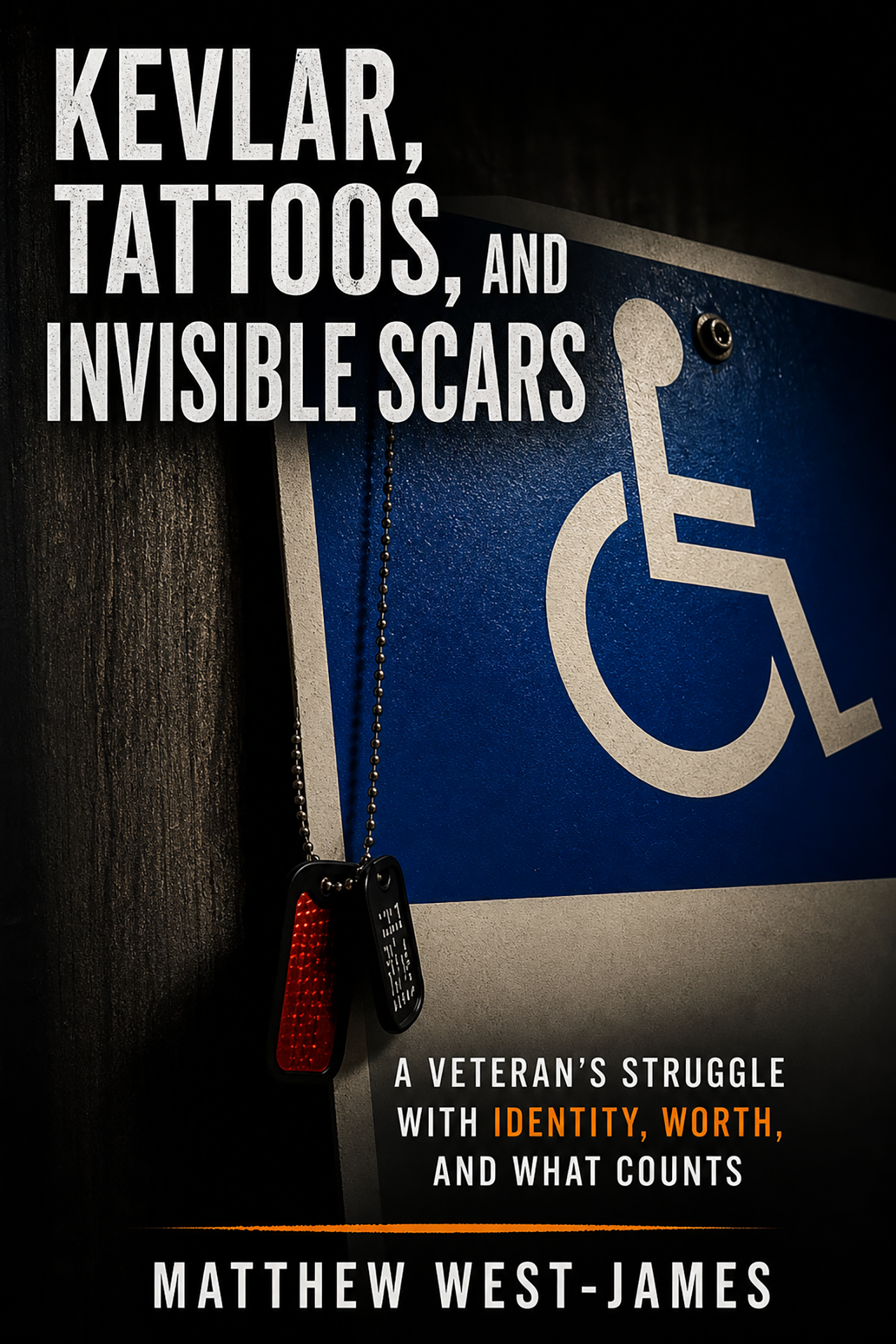
Kevlar, Tattoos and Invisible Scars
This is not a story about the worst day of a war.
It is a story about what happens when you decide your experience didn’t count.
After serving in Iraq and earning a Combat Action Badge, Matthew West-James came home with something harder to define. Not visible wounds. Not a clear narrative. Just a growing belief that whatever he went through wasn’t enough to matter.
So he ignored it.
What followed wasn’t a single breaking point, but a pattern. A way of thinking that turned doubt into identity, minimized anything that didn’t meet an internal standard, and made it nearly impossible to accept help, recognition, or even reality as it was.
Kevlar, Tattoos, and Invisible Scars is not a clean story of recovery. It does not offer simple answers or neat resolutions.
It is an honest account of what it looks like to carry something you don’t believe you earned, and what happens when that belief starts to shape everything else.
If you’ve ever told yourself it “didn’t count,” this book is for you.
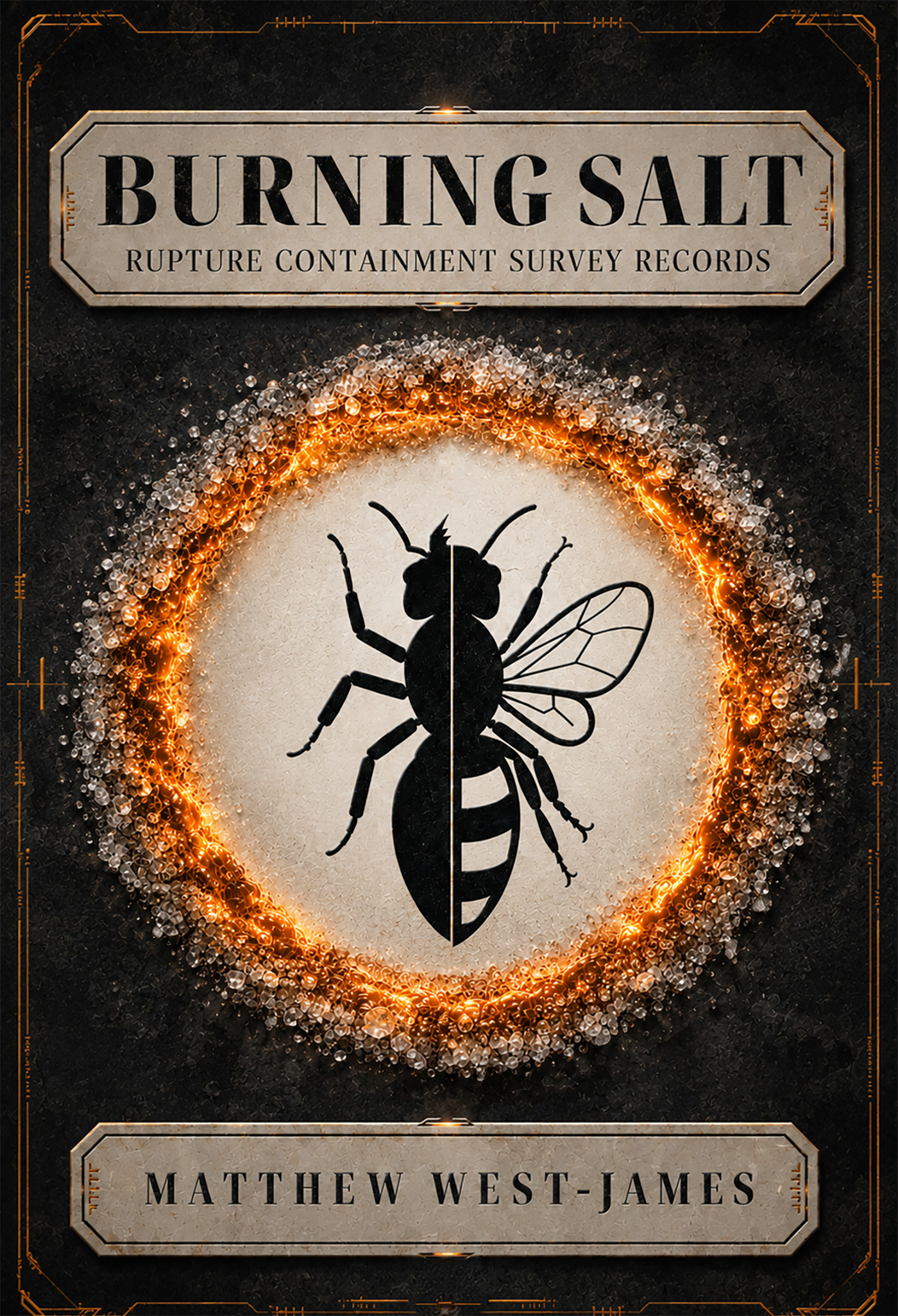
Burning Salt
A rupture has opened between realities.
On one side lies a dying planar universe, fragile, organized, and impossible to understand by ordinary means. On the other lies a source world dense with motion, chemistry, hunger, architecture, and life that refuses to fit inside familiar definitions.
The containment teams are not explorers by choice. They are specialists sent where contact itself can become contamination, where a wingbeat can become an extinction event, and where the wrong interpretation of a signal can turn observation into catastrophe. Their mission is simple enough on paper: identify the source, protect the injured universe, and determine whether the organisms near the rupture can be understood, redirected, or survived.
Nothing about the work remains simple.
As survey records accumulate, two populations emerge as the center of the mystery. One writes its world in chemical trails, collective labor, and underground architecture. The other builds in air, speaks through movement, stores sunlight in transformed nectar, and turns the labor of thousands into something that looks uncomfortably like thought.
Are these societies intelligent, or only organized? Is communication possible without language? Does a mind need a body, or can a body be made of many lives moving together?
Burning Salt is a first-contact novel told through field reports, scientific uncertainty, and the uncomfortable realization that the universe does not care where anyone draws the line between instinct, intelligence, and civilization.